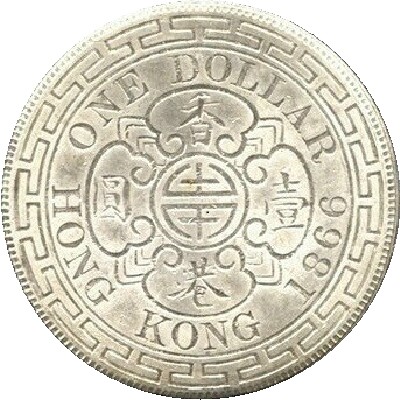
? This one dollar silver coin has the portrait of Queen Victoria facing left on the obverse with the legend VICTORIA QUEEN HONG KONG ONE DOLLAR 1864. The reverse shows four Chinese symbols in the centre depicting date, country and denomination. Separated by a circle, the legend reads HONG KONG ONE DOLLAR 1864 The heads side of the coinThe inscription around the inner edge of the coinThe tails side of the coin
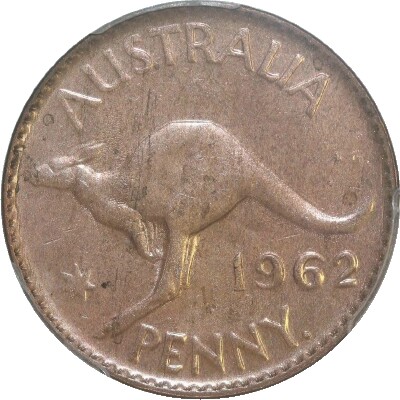
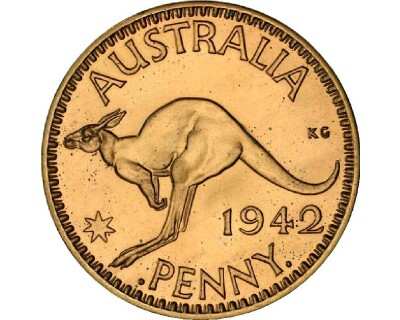
? The Kangaroo design continued into this type right until the introduction of decimal currency with the conclusion of the penny series in 1964. This type features a slightly reworded obverse legend, ELIZABETH II DEI GRATIA REGINA F:D , which was modified after public outcry that the previous type omitted FIDEI DEF . All dates in the series are easy to acquire in mint state , though the 1959 plain from the Melbourne mint is quite scarce. Finding any date beyond MS64 is a challenge, ...
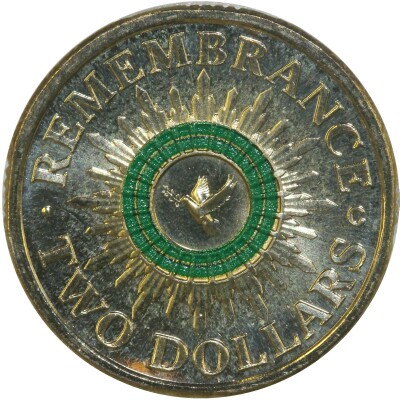
Get values for your 2014-C Two Dollar
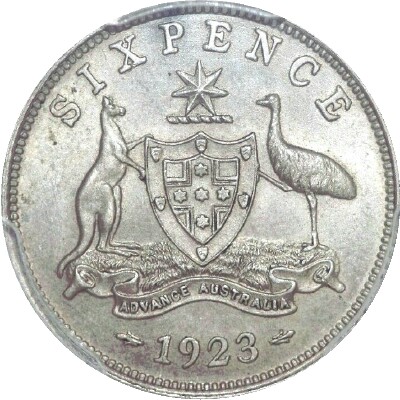
? The George V sixpence series, lasting throughout George V's reign from 1911 to 1936, features the Australian coat of arms with ADVANCE AUSTRALIA across the scroll, SIXPENCE up the top, and the year of issue down the bottom. The obverse features the crowned bust of King George V facing to the left and the legend, GEORGIVS V D.G. BRITT : OMN : REX F. D. IND : IMP . Like most George V series, this a very popular series to collect. In lower grade, all dates can be acquired at reasonable ...
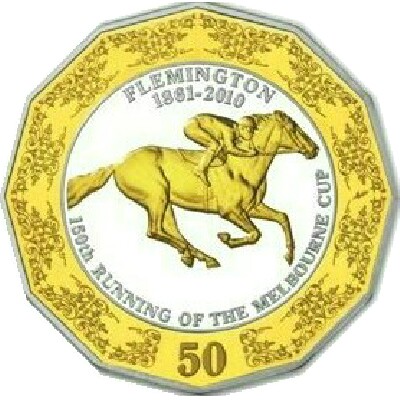
? This dodecagonal fifty cent sterling silver coin was issued to commemorate the 150th running of the classic horse race, The Melbourne Cup. The reverse was designed by Wojciech Pietranik and shows the artists impression of a horse and jockey in action. The legend FLEMINGTON 1861 2010 150th RUNNING OF THE MELBOURNE CUP 50